

Simple Short Game Habits That Can
Lower Scores Fast
Small changes around the greens can make a big difference. You do not need a perfect golf swing to save strokes. You need a repeatable plan, a calmer mind, and the conviction to hit the shot you chose.
Most golfers lose shots around the green because they panic. They see the bunker, the tight lie, the pond, the downhill green, or the short-sided pin, and their brain immediately says, “Don’t blade it. Don’t chunk it. Don’t embarrass yourself.”
That is exactly when the short game gets hard.
Top golf mental coaches have been saying this for years. Dr. Bob Rotella, one of the best-known golf psychologists, teaches that confident golfers think about what they want to happen, while golfers who lack confidence think about what they do not want to happen. (GolfDigest.com) Dr. Joe Parent, author of Zen Golf, teaches golfers to clear the mind, focus, and play in the moment. (Google Books) Dr. Gio Valiante built his work around helping golfers and elite performers optimize performance under pressure. (Gio Valiante)
That is why the short game is not just technique.
It is mindset.
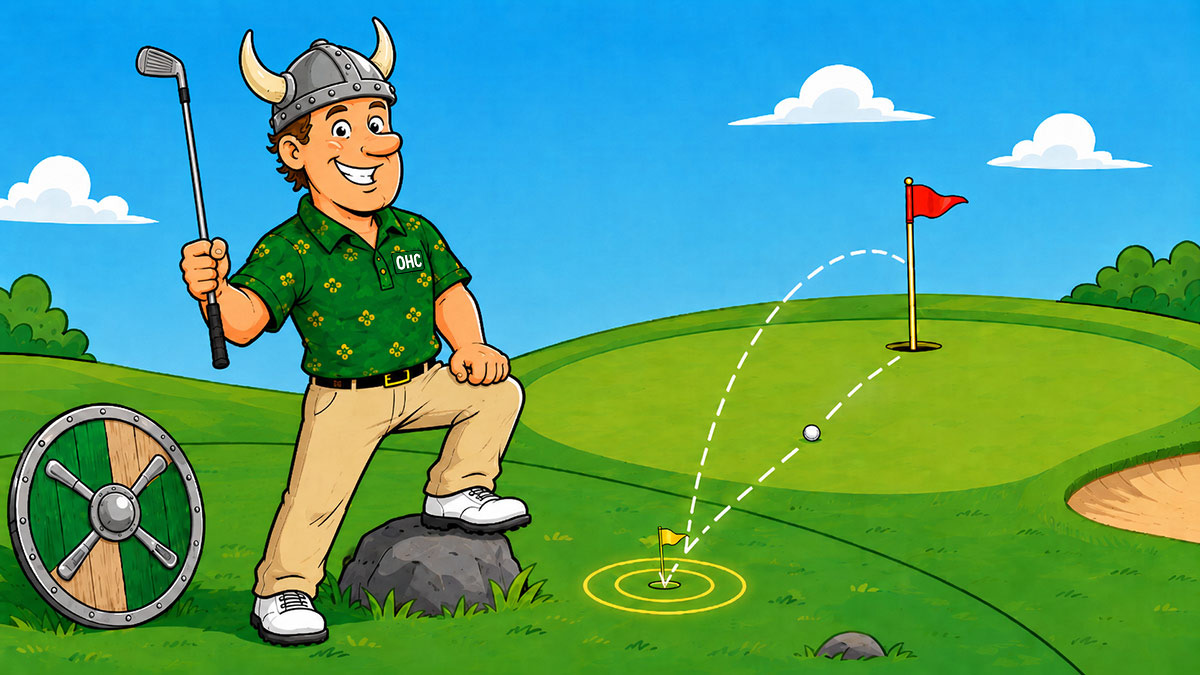
And around the green, you need to become a VIKING.
Not reckless. Not tense. Not angry.
A short-game VIKING means you step into the shot with strength, commitment, and conviction. You pick your spot. You trust your setup. You swing with one clear intention.
No begging. No hoping. No panic.
Just conquer the chip in front of you.
Habit 1: Pick One Landing Spot
Before you think about stroke, club, or technique, pick your landing spot.
Most golfers look at the hole. That is natural, but the hole is usually not where the ball needs to land. The better question is:
Where does the ball need to land first?
Look at the green like a pool table. The ball lands, rolls, breaks, and slows down. Your job is to choose the first landing spot, then let the ball release from there.
For a basic chip, pick a spot a few feet onto the green. For a longer chip, pick a spot that gives the ball room to run. For a flop or soft shot, pick a spot closer to the hole and commit to more height.
A simple target quiets the mind.
Habit 2: Use the Same Setup Every Time
Great chipping starts before the club moves.
Here is a simple setup checklist:
- Feet narrow.
- Weight slightly forward.
- Ball slightly back of center for basic chips.
- Hands slightly ahead.
- Chest quiet.
- Eyes on the landing spot, then back to the ball.
- One clear motion.
The goal is not to look perfect. The goal is to remove extra moving parts.
This is why one-handed chipping can help so many golfers. It takes the “helping hands” out of the equation. You stop flipping. You stop steering. You start feeling the clubhead again.
Habit 3: Read the Lie Before You Choose the Shot
The lie tells you what shot is available.
Before you pull the club back, look closely:
- Is the ball sitting up?
- Is it sitting down?
- Is the grass growing into you or with you?
- Is the ground firm, soft, wet, tight, or fluffy?
- Do you have room to roll the ball?
- Is there trouble long, short, left, or right?
A tough short shot gets easier when you stop forcing the wrong shot.
If the lie is tight, keep the shot simple and controlled.
If the ball is sitting down, expect less spin and more roll.
If the green runs away from you, land it softer or choose a safer target.
If you are short-sided, accept that 10 feet might be a great result.
Smart chipping is not always about getting cute. Sometimes the best short-game shot is the one that gives you a putt and keeps disaster out of play.
Habit 4: Make the Tough Shot Smaller
Pressure makes shots feel bigger than they are.
A 12-yard chip over a little rough can suddenly feel like a tour-level shot when your buddies are watching.
So make it smaller.
Do not think, “I need to get up and down.”
Think:
- Land it on that leaf.
- Brush the grass.
- Finish toward the target.
- Let it roll.
That is the shot.
This is the mental-game secret: your brain performs better when the task is simple and specific. Dr. Rotella has also emphasized the importance of a routine because it gives the golfer something useful to focus on when nerves show up. (GolfWRX)
Your short-game routine should be simple:
- Look at the lie.
- Pick the landing spot.
- Take one feel rehearsal.
- Step in.
- Be a VIKING.
- Hit it.
Habit 5: Stop Practicing Fear
Every time you stand over a chip thinking “don’t chunk it,” you are rehearsing the chunk.
Every time you think “don’t blade it,” you are giving your brain the exact movie you do not want to watch.
Instead, tell your brain what to do.
- Clip the grass.
- Land it soft.
- Brush it forward.
- Finish balanced.
- Roll it to the hole.
This is not fake positivity. This is direction.
Your brain needs a command. Give it the right one.
Habit 6: Take Pride Out of It
One-handed chipping looks different. Some golfers may think it is odd at first.
Who cares?
The goal is not to look traditional. The goal is to get the ball closer to the hole.
All pride aside, one-handed chipping works because it simplifies the motion. It helps you feel the clubhead, control the low point, and stop fighting your own hands.
If your two-handed chip has been a disaster, maybe the answer is not more complicated mechanics.
Maybe the answer is simpler.
Habit 7: Build a Go-To Shot
Every golfer needs one short-game shot they trust under pressure.
Not five shots. Not ten shots. One.
Start with the basic one-handed chip. Learn it from 5 to 15 yards. Get comfortable brushing the grass. Get comfortable landing it on a spot. Get comfortable making a short, confident motion.
Once that shot becomes reliable, your whole short game changes.
You do not walk up to the ball hoping anymore.
You walk up thinking:
I have a shot for this.
That is confidence.
The VIKING Short Game Mindset
When you face a tough chip, remember this:
V – Visualize the landing spot
See where the ball lands before you swing.
I – Ignore the disaster shot
Do not feed your brain the chunk, blade, or skull.
K – Keep the setup simple
Narrow stance, weight forward, quiet motion.
I – Intend the shot fully
No half-commitment. Pick it and hit it.
N – Notice the lie
The lie decides what shot makes sense.
G – Go with conviction
Once you are in, be in.
That is how you become a VIKING around the green.
Strong. Simple. Committed.
Final Thought
Lower scores do not always come from huge swing changes. Sometimes they come from one simple short-game habit that finally gives you confidence.
- Pick a landing spot.
- Read the lie.
- Use a simple setup.
- Trust your motion.
- Stop fearing the miss.
- Be a VIKING.
And start loving your short game again.
Frequently Asked Questions
How can I stop chunking chip shots?
To stop chunking chip shots, keep your weight slightly forward, narrow your stance, and focus on brushing the grass instead of helping the ball into the air. A common mistake is flipping the hands at impact. One-handed chipping can help because it teaches you to feel the clubhead and control the low point.
Why do I blade chip shots across the green?
Bladed chip shots usually happen when golfers get nervous, lift up, flip their wrists, or try to scoop the ball. The fix is to stay committed, keep your chest quiet, and focus on a smooth motion through the ball. Pick a landing spot and swing to that spot instead of thinking, “Don’t blade it.”
Should I use one club or different clubs for chipping?
You should learn one reliable basic chip first, then add different clubs as your feel improves. A wedge may be best when you need height, while a 9-iron or pitching wedge can be better when you have room for the ball to roll. The key is matching the club to the shot, lie, and landing spot.
How do I handle tough short-game shots?
Handle tough short-game shots by making the shot smaller in your mind. Instead of thinking about getting up and down, focus on one task: land the ball on a specific spot. Read the lie, choose a smart target, accept a safe result, and swing with conviction.
Why is the mental game so important in chipping?
The mental game is important in chipping because fear causes tension, hesitation, and poor contact. Many golfers miss short shots because they think about the bad result before they swing. A clear routine helps you stay calm, pick a target, and execute with confidence.
What should I think about before a chip shot?
Before a chip shot, think about three things: the lie, the landing spot, and one simple swing cue. A good cue is “brush the grass” or “land it on that spot.” Avoid negative thoughts like “don’t chunk it” or “don’t blade it” because your brain needs a positive command.
How do I build confidence around the greens?
Build confidence around the greens by developing one short-game shot you can trust under pressure. Practice it from 5 to 15 yards until it feels natural. Confidence comes from repetition, a simple setup, and knowing you have a reliable shot when the pressure is on.
What is the fastest way to improve your short game?
The fastest way to improve your short game is to simplify your setup, pick one landing spot, and practice one go-to chip shot until you trust it. Most amateur golfers struggle because they have too many swing thoughts and not enough commitment. Around the green, simple usually wins.
What is a good chipping setup for amateur golfers?
A good chipping setup starts with a narrow stance, weight slightly forward, hands slightly ahead, and the ball slightly back of center for basic chips. Keep the motion simple and avoid extra wrist action. The goal is clean contact, predictable rollout, and fewer moving parts.
What does it mean to be a VIKING around the green?
Being a VIKING around the green means chipping with confidence, commitment, and a clear plan. Visualize the landing spot, ignore the disaster shot, keep the setup simple, intend the shot fully, notice the lie, and go with conviction.
